










Corkscrews 101

Guides>Wine 101 Guides>Storing & Pouring Guide>Corkscrews 101
CONTENTS


Corkscrews 101
We've all been there. The cheese board's out, the glasses are poured (well, nearly), and someone asks the dreaded question: “Has anyone got a corkscrew?” Cue a group of grown adults staring at a perfectly good bottle of wine like it's a locked safe.
The corkscrew always seems to be in the other drawer, at your mate’s place, or in the picnic basket you didn’t bring. Before anyone reaches for a shoe (yes, this is a last resort), let’s find a better way in.
The good news is a little preparation saves a lot of shoe-banging. Pick the right corkscrew, keep it somewhere you'll actually find it, and you'll never have to MacGyver a bottle of wine again.
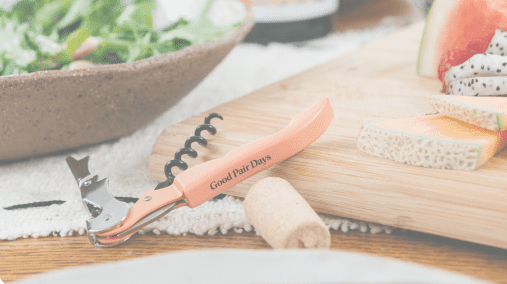
So, which one should that be? The best corkscrew for most bottles today is a double-hinged waiter’s friend. It's cheap, it fits in a drawer or pocket, and it handles nearly any cork you'll meet.
Want to know how to use this mystical piece of witchcraft?
We've already covered corks, screw caps and other closures. This one's about the other half of the equation: the tool that gets the cork out. There are hundreds of designs out there, from 18th-century T-bars to gadgets that run on batteries or gas. Some are brilliant, some are fun party tricks, and a couple are worth owning even if you only use them once a year.
Here's a quick tour of where corkscrews came from, how to use the main styles without wrestling the bottle, and which ones we'd actually put in your kitchen drawer.
A short history of the corkscrew
The corkscrew probably started life on the battlefield. Musket owners in the 1600s used a spiral tool called a gun worm to pull stuck wadding and unfired charges out of their barrels. Once glass bottles sealed with cork became common, someone realised the same trick worked on wine. By 1681, there was a written reference to a steel worm for drawing corks out of bottles.
From there it's been a steady run of people trying to make that pull a little easier.
The old guard: T-bars and butterflies
The original T-bar
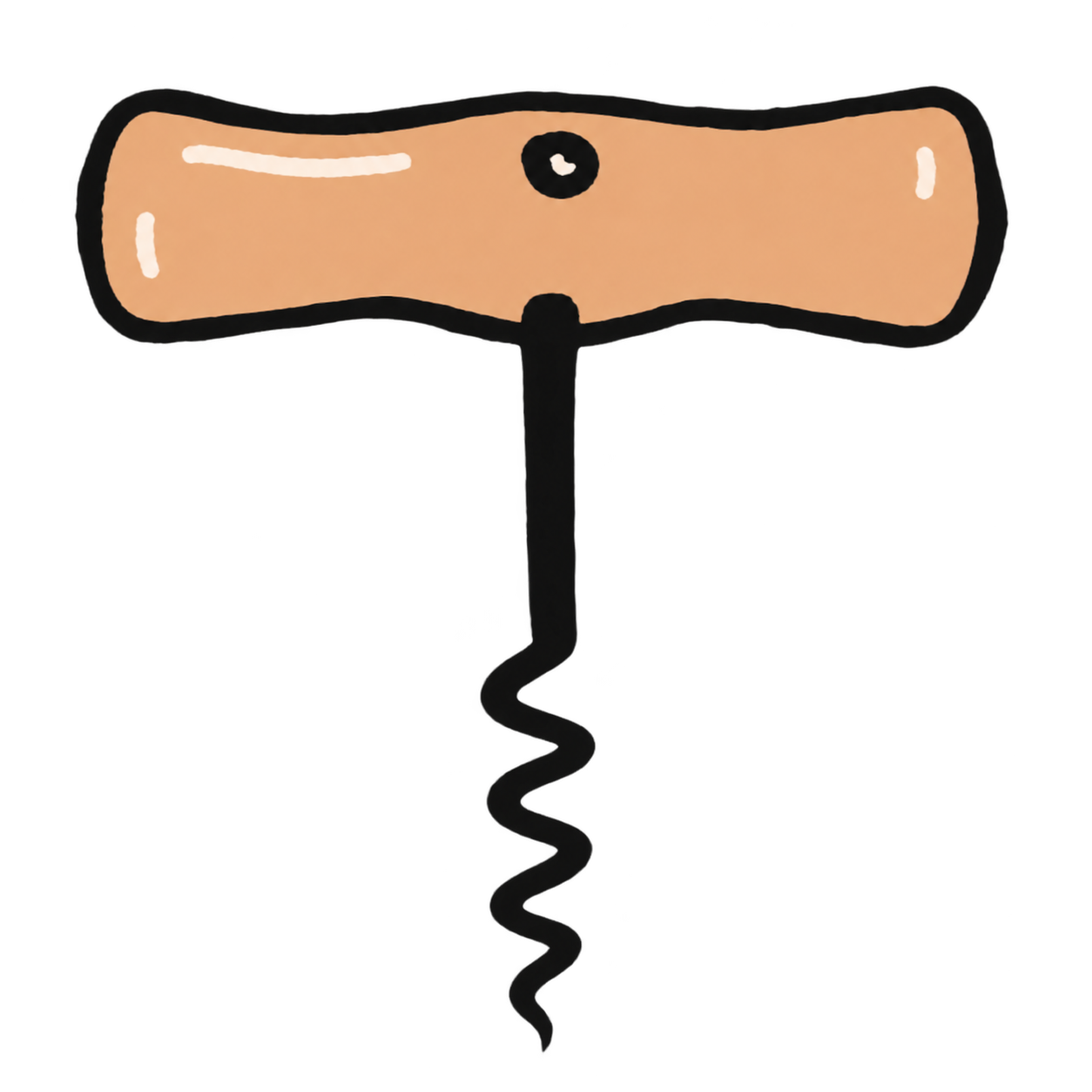
This is the corkscrew in its simplest form: a metal spiral (the worm) with a handle across the top. No levers, no moving parts, just you and the cork.
How to use it
- Cut the foil just below the lip of the bottle and peel it away.
- Put the tip of the worm slightly off-centre, so the spiral itself runs down the middle of the cork.
- Twist it in until only one turn of the spiral is showing.
- Hold the bottle firmly between your knees or on the bench, and pull straight up with a steady, slow motion.
The verdict: It works, and there's a certain old-school charm to it. But all the force comes from your arm, so a tight cork can turn into a proper battle and you're more likely to snap it. Good as a backup in the picnic bag, not as your everyday tool.
The butterfly (winged corkscrew)
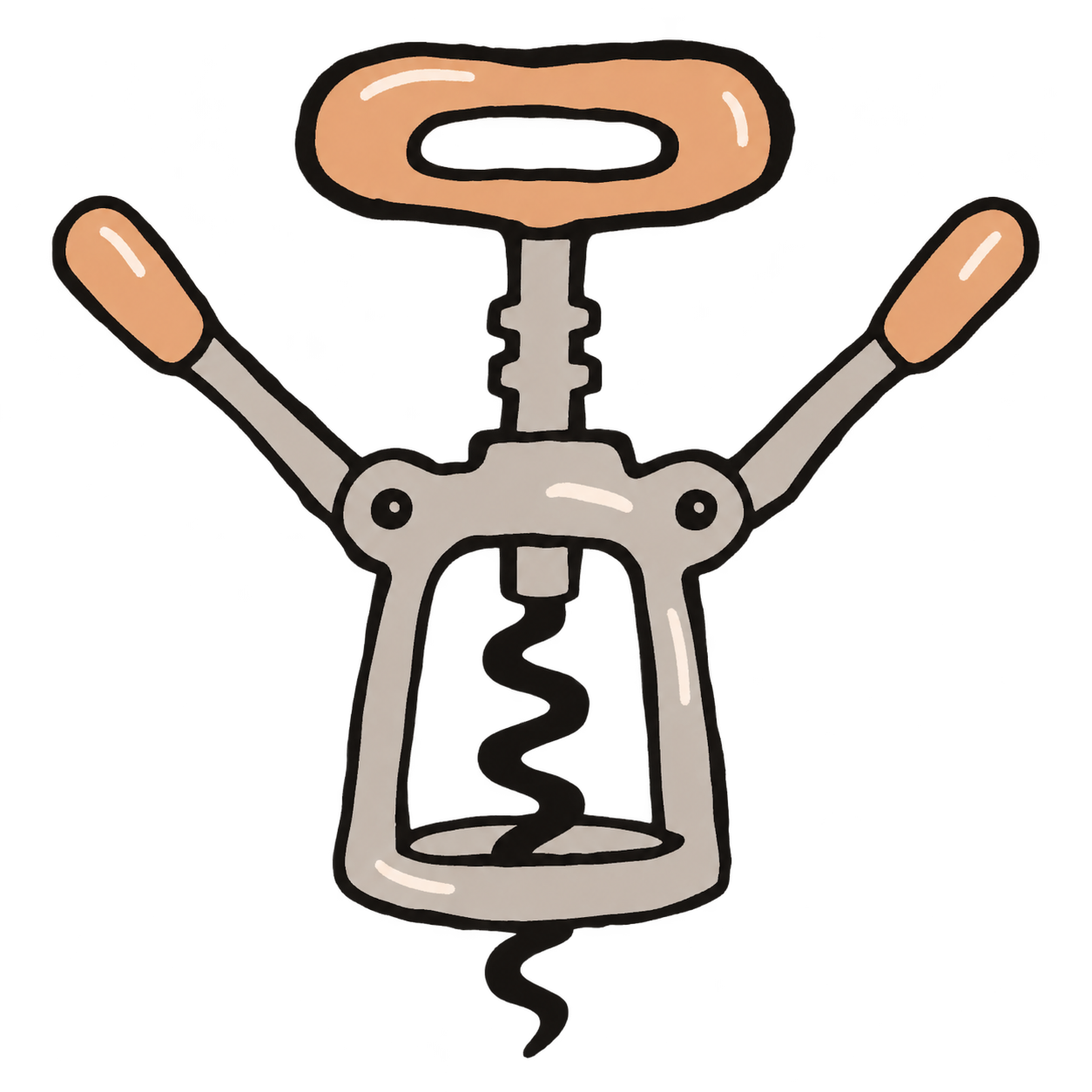
You'll know this one. It has a bell that sits over the neck, a screw down the middle, and two arms that rise like wings as you twist the handle. Push the wings down and the cork comes up. It’s been in the same kitchen drawer for years, and somehow it’s always the first one you find.
How to use it
- Remove the foil.
- Sit the bell over the neck with the wings down.
- Twist the top handle. The screw goes in and the wings rise.
- Push both wings down to lift the cork.
A few things to watch
- Watch the screw. Some butterfly models use a thick, solid-core screw that can tear into the cork and leave crumbs in your glass.
- Watch the depth. If the screw goes all the way through, it can push crumbs into the wine. If it’s too shallow, it can tear through the top of the cork.
- Keep it straight. If the screw goes in at an angle, the cork can come out crooked and break.
- Take care with old corks. A soft, aged cork can crumble under the screw.
- Check for wear. If the gears loosen or the bell stops sitting straight, it’s harder to get a clean pull.
The verdict: Two wings and plenty of ambition. If your butterfly is doing the job, carry on. If you’re often getting stuck or snapping corks, a double-hinged waiter’s friend is worth a try: its two-stage lift gives you more control and less wrestling.
The one we'd pick: the dual-hinge waiter's friend
Walk into any restaurant and the sommelier will have one of these in their pocket. The waiter's friend folds up like a pocketknife and has three parts: a small blade for the foil, the worm, and a lever arm that rests on the lip of the bottle.
Carl Wienke patented a single-lever design in Germany in 1882. The dual-hinge version (sometimes called a double-lever or two-step) adds a second notch, so you pull the cork in two short stages instead of one long heave. That small change makes a big difference. The pull stays straight up, you need less effort, and the cork is less likely to bend or snap halfway.
How to use it
- Cut the foil. Flip out the blade and run it around the neck just under the lip. Peel off the top.
- Line up the worm. Open the worm so it sits at a right angle to the handle. Set the tip just off-centre so the spiral runs down the middle of the cork.
- Twist it in. Keep turning until there's about one turn of the spiral left above the cork. Too shallow and you'll tear the cork. Go all the way through and you can push crumbs into the wine.
- First hinge. Fold the lever down and rest the first notch on the lip of the bottle. Hold it in place with your thumb and lift the handle. The cork will come up about halfway.
- Second hinge. Move the second notch onto the lip and lift again. The cork slides out the rest of the way.
- Finish by hand. If there's a little left in the neck, give it a gentle wiggle to ease it free. No popping needed.

The verdict: It's the best all-rounder you can buy. It's cheap, small, works on almost every cork, and with a bit of practice it's quicker than any gadget. Look for one with a serrated foil blade, a hollow spiral worm and a sturdy hinge. Find one in our Rewards Store (AU / UK), or you can go with brands like Pulltex, Laguiole and Coutale.
For old corks: the two-prong extractor (Ah-So)
Old corks are a different beast. After years in a bottle, natural cork can turn soft and crumbly, or dry and brittle. Drive a worm through the middle and it can split, crumble, or slide down into the wine.
The two-prong extractor, often called an Ah-So or butler's friend, skips the screw entirely. It's two thin, flat metal blades of slightly different lengths joined by a handle. Instead of piercing the cork, the blades slide down between the cork and the glass and grip it from the sides. The story goes that a sneaky butler could pull the cork, sample the wine, and pop the cork back in without leaving a mark.
How to use it
- Remove the foil and wipe away any mould or grime on top of the cork.
- Slide the longer prong in first, between the cork and the glass.
- Insert the shorter prong on the opposite side.
- Rock the handle gently side to side, working both blades down until the handle sits on top of the cork.
- Twist and pull at the same time, slowly, like you're unscrewing the cork upward.

The verdict: A must-have if you're opening older bottles, and handy for corks that have already broken in half. It takes a few goes to get the hang of it, and it can push a loose cork into the bottle if you're heavy-handed. For young wines, stick with the waiter's friend.
The gadgets: electric, air pump and the Durand
Electric corkscrews
Sit it on top of the bottle, press a button, and a motor spins the screw in and pulls the cork out. Most models also release the cork with a second press.
The verdict: Less twisting, more ease. An electric opener is a handy choice if you find traditional corkscrews uncomfortable, or simply prefer opening your bottle at the press of a button. Keep it charged and you’re good to go. Fancy trying one? Take a look in our Rewards Store (AU / UK).
Air pump and gas openers
These push a thin needle straight through the cork, then pump air (or a puff of gas from a cartridge) into the space between the cork and the wine. The pressure builds until the cork pops up and out.
The verdict: A bit of theatre, and it can work on standard corks. Follow the opener’s instructions and keep it away from sparkling wine or chipped or damaged bottles. For old, fragile corks, reach for an Ah-So or a Durand.
The Durand
The Durand looks like a gadget but it's the real deal for old wine. Atlanta collector Mark Taylor invented it, and it was first introduced in 2007. It combines a worm with an Ah-So-style two-prong extractor, so you get the best of both: the screw holds the cork together from the middle while the prongs grip it from the sides.
- Remove the foil and clean the top of the cork.
- Twist the worm into the centre until the stabiliser bar rests on top of the cork or bottle.
- With one prong on each side of the bar, slide the longer prong in first, then the shorter one.
- Rock the handle gently to ease the prongs down until it rests on the stabiliser bar.
- Hold the bottle steady. Grip the bar and handle together, twist, then lift slowly as you keep twisting.
The verdict: Pricey (US$145 from the maker) and overkill for everyday drinking. But if you've got a cellar full of 20-year-old reds, it’s a handy way to ease out a fragile cork in one piece.
Agglomerate corks have changed the game
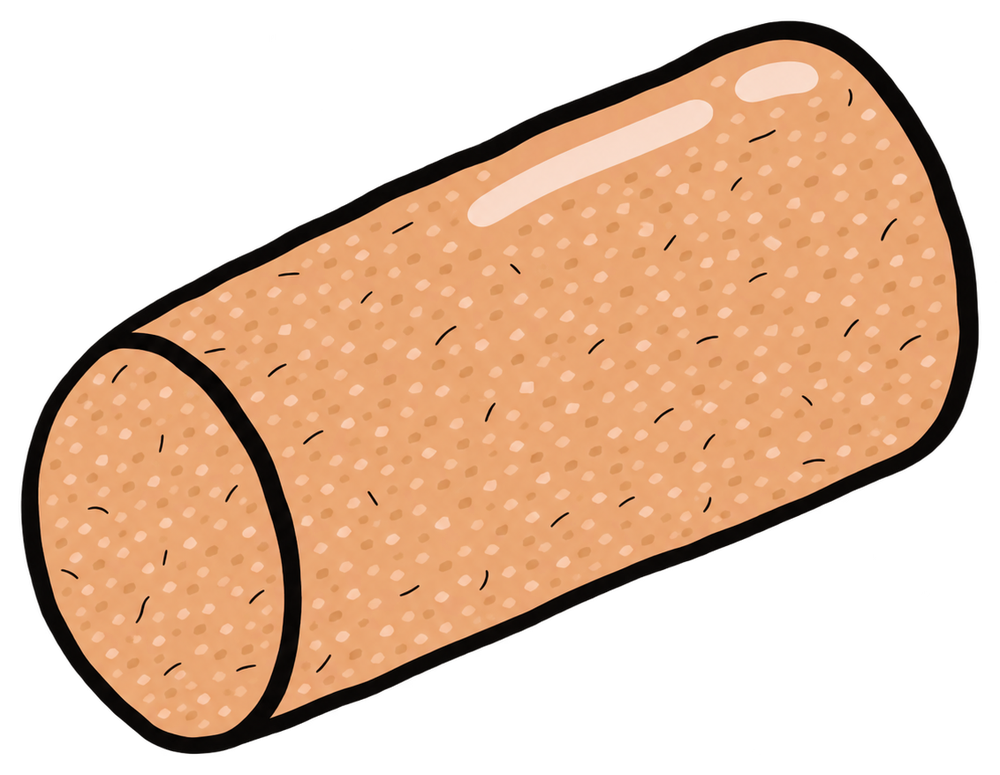
Some of the corks you pull today aren’t a single piece of bark. Agglomerate corks are made from small granules of cork bound together and pressed into shape. Makers of technical corks such as Diam treat the granules to reduce TCA, one of the main causes of cork taint.
That's great news for your wine, and it changes how you open it.
- Expect a firmer pull. Some agglomerate corks fit snugly in the neck. This is where a dual-hinge waiter’s friend earns its keep.
- Go deep. A short screw can rip out the top layer of granules. Twist the worm in until there's only one turn showing so you have a good grip on the cork.
- Pull straight. A two-step waiter’s friend helps you lift a snug cork slowly and straight up.
- Save the Ah-So for old corks. If the prongs won’t slide easily around a snug cork, reach for the waiter’s friend.
- Cellaring depends on the closure. Some agglomerate corks are designed for wines you’ll drink young. Others are made for longer ageing.
The upside? You'll rarely need a specialist tool for these. A good waiter's friend handles the lot.
So which corkscrew should you use?
If you only buy one, make it a dual-hinge waiter's friend. Add an Ah-So or a Durand if you start cellaring older bottles.
When things go wrong
Even the pros snap a cork now and then. Here's how to save the bottle.
- Cork snapped in half. Twist the worm back into the remaining piece at a steep angle, close to the glass, then pull very slowly. An Ah-So also works well here.
- Cork crumbling as you go. Stop pulling. Switch to an Ah-So or a Durand if you have one, and work slowly.
- Cork pushed into the bottle. Don't panic, the wine's fine. Pour it through a fine strainer or a coffee filter into a decanter and carry on.
- Bits of cork in your glass. Purely cosmetic. Fish them out with a spoon. Cork crumbs won't affect the taste, though a corked (musty, wet cardboard) wine is a different story.
Got a bottle that's giving you grief? Grab your waiter's friend, take it slow, and remember: the wine's worth the effort. Cheers to that.
About the Author
James Boden is a certified sommelier that feels most comfortable in the heat of service when the pace is quickest. A background in track & field and a passion for history and the stories behind the wines provides him with a different approach to wine and all its facets.