








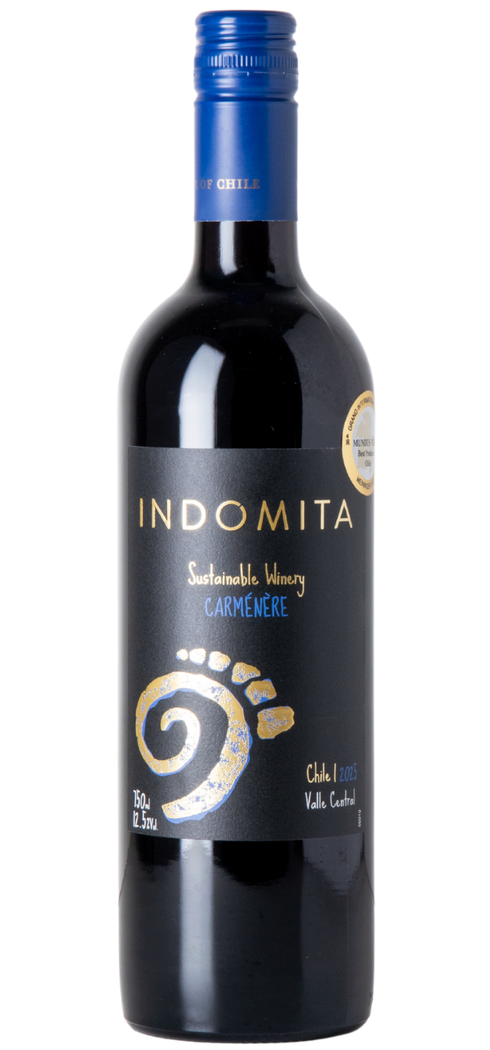
Viña Indómita Carménère 2025
Primary flavours

Blue Plum

Blueberry

Cherry

Capsicum

Dried Thyme

Rosemary

Smoky
Details
For those not too familiar with Carménère, this is an important variety for Chile, the equivalent of Barossa Shiraz, Margaret River Chardonnay or Chris Hemsworth and the gym. Blueberries and cherries are in full display, you’ll think there are a few punnets underneath your nose. Behind this berry goodness is some smoky tannins and dried rosemary and thyme.
Origin: Originally from Bordeaux in eastern France. Mainly Grown In: These days Chile is the biggest proponent of this grape, followed by Italy. Key Facts: Another member of the Bordeaux gang that has now immigrated overseas, Carménère is one suave customer, offering up loads of luscious dark fruit like black cherry, blueberry and blackcurrant. It’s full to the brim of purple flowers – think lavender and violet. It also kicks hard with peppery spices and some of the Cabernet-styled herbaceousness – stuff like green capsicum and grass are not uncommon flavour descriptors. This grape generally produces soft wines that are relatively full-bodied but without much tannin. The acid is also gentle, making for smooth sippers that work well in the cooler months. Fun Fact: Chile is dominating the production of Carménère, with 21,800 acres planted compared to the mere 70 acres in its original homeland of France.
Origin: Originally from Bordeaux in eastern France. Mainly Grown In: These days Chile is the biggest proponent of this grape, followed by Italy. Key Facts: Another member of the Bordeaux gang that has now immigrated overseas, Carménère is one suave customer, offering up loads of luscious dark fruit like black cherry, blueberry and blackcurrant. It’s full to the brim of purple flowers – think lavender and violet. It also kicks hard with peppery spices and some of the Cabernet-styled herbaceousness – stuff like green capsicum and grass are not uncommon flavour descriptors. This grape generally produces soft wines that are relatively full-bodied but without much tannin. The acid is also gentle, making for smooth sippers that work well in the cooler months. Fun Fact: Chile is dominating the production of Carménère, with 21,800 acres planted compared to the mere 70 acres in its original homeland of France.
Read more
Taste Profile
This wine’s tasting notes.
Sweetness

nonesomelots
Body
lightmediumfull
Fruitiness
lowmediumhigh
Tannins
lowmediumhigh
Acidity
lowmediumhigh
Oak
nonesomelots
Alcohol
low
(under 12%)medium
(12-14%)high
(14%+)
Taste Summary

This wine’s tasting notes are leaning towards medium bodied, low sweetness, with low acidity, some fruitiness, medium tannins, medium alcohol and no oak.
Specs
Region
Central Valley
country
Chile
Grape type
Carménère
Wine Maker
Viña Indómita
Alcohol
12.5%
Vintage
2025
Cellar period
1-3 years
Closure
Screw Cap
Production method
Vegan
Temperature
Room Temperature 15°C-18°C
Pairing guide
We can’t help but be impressed by this beautiful Carménère from Indómita, showcasing the very best of Chile’s sustainably-produced wine scene right now. Rich, flavourful and packing a real punch of the palate, it’s the kind of wine that’s perfect for pairing with hearty cuts of red meat cooked over coals. Brisket, racks of ribs, homemade burgers and ribeye steak will work especially well, and it’s also excellent with leg of lamb, braised chorizo, and deeply savoury red meat and vegetable stews of all kinds. Roast root vegetables like sweet potato and beetroot, pumpkin and sage combos, cheese polenta, and wild mushrooms would make for excellent veggie pairings, too.
Read more
Food

BBQ

Grilled Meat
Tastes

Bitter

Rich
Moods

Contemplative
Seasons

Winter
Recipe Matches


Wine region


Central Valley, Chile
Nestled in the heart of Chile, the Central Valley wine region is a land of sun, fun, and delicious wines. The region is known for producing a wide variety of wines, from crisp Sauvignon Blanc and Chardonnay to full-bodied Cabernet Sauvignon and Carménère (a local favourite). The Central Valley has a warm, dry climate and diverse soils, which make it well-suited to grape growing and give the wines produced there a unique character. So why not explore the wines of the Central Valley and you just might find your new South American love?
Read more