








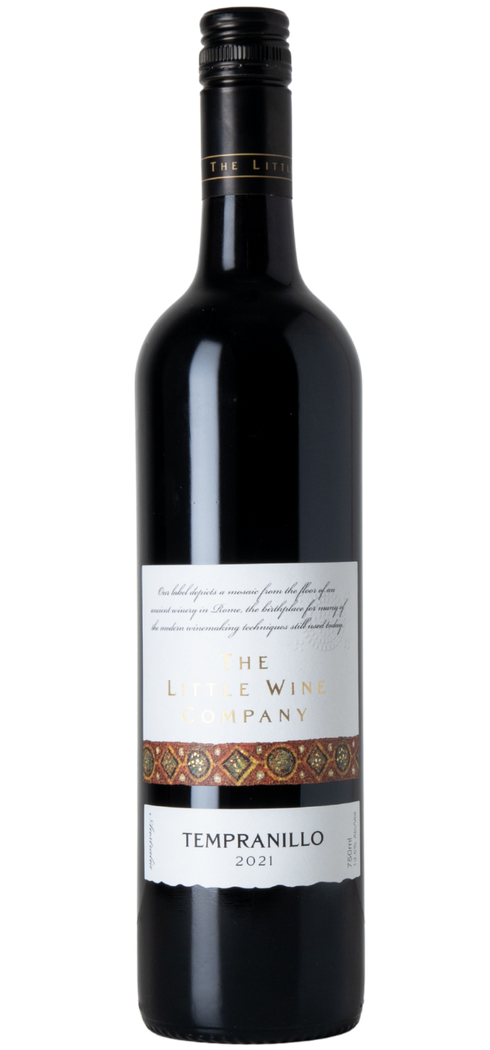
The Little Wine Company Tempranillo 2021
Primary flavours

Dark Berries

Sour Cherry

Green Olives

Leather
Details
The secret to this Tempranillo's laidback charm is time. An extra few years in the bottle has helped soften out the edges and made this into a gently earthy, medium-bodied red that feels savoury and easy to love right now.
Ian and Suzanne Little are anything but little. This husband and wife super team have lived a fascinating wine life, now culminating in their Hunter Valley project for the last twenty-five years, The Little Wine Company. Suzanne is the winemaking figurehead here, tracing her experience back to Katnook Estate in the late 1980s. Suzanne, who has degrees in economics, law and wine science, became really famous working for the (now forgotten) Rosemount Estate in the 90s when Rosemount was the #1 wine brand in the country. Then in 2000, Suzanne left Rosemount to join forces with her winemaking husband, Ian (also a trained biochemist and brewer), to develop The Little Wine Company. Together, they are exploring grapes that don't fit the usual Hunter Valley stereotypes, including Albariño, Barbera, Tempranillo, Vermentino and Pecorino.
Ian and Suzanne Little are anything but little. This husband and wife super team have lived a fascinating wine life, now culminating in their Hunter Valley project for the last twenty-five years, The Little Wine Company. Suzanne is the winemaking figurehead here, tracing her experience back to Katnook Estate in the late 1980s. Suzanne, who has degrees in economics, law and wine science, became really famous working for the (now forgotten) Rosemount Estate in the 90s when Rosemount was the #1 wine brand in the country. Then in 2000, Suzanne left Rosemount to join forces with her winemaking husband, Ian (also a trained biochemist and brewer), to develop The Little Wine Company. Together, they are exploring grapes that don't fit the usual Hunter Valley stereotypes, including Albariño, Barbera, Tempranillo, Vermentino and Pecorino.
Read more
Taste Profile
This wine’s tasting notes.
Sweetness

nonesomelots
Body
lightmediumfull
Fruitiness
lowmediumhigh
Tannins
lowmediumhigh
Acidity
lowmediumhigh
Oak
nonesomelots
Alcohol
low
(under 12%)medium
(12-14%)high
(14%+)
Taste Summary

This wine’s tasting notes are leaning towards medium bodied, low sweetness, with medium acidity, some fruitiness, low tannins, medium alcohol and some oak.
Specs
Region
Hunter Valley
country
Australia
Grape type
Tempranillo
Wine Maker
The Little Wine Company
Alcohol
13.5%
Vintage
2021
Cellar period
1-3 years
Closure
Screw Cap
Production method
Vegan
Temperature
Room Temperature 15°C-18°C
State
NSW
Pairing guide
When wines like this get a little older, the earthy savoury tones really amp a notch, and really make you lean into more earthy dishes. In particular, this delicious bottle is going to match up very well with game meats - especially venison and wild boar - powerfully-flavoured beef and lamb stews, roast goose or duck, smoked meats and anything served with caramelised red onions. Braised red cabbage, Brussels sprouts, and other festive vegetable side dishes will also hit the high notes!
Read more
Food

Roasted Meat

BBQ

Spanish
Tastes

Bitter

Earthy

Rich
Moods

Contemplative

Bored
Seasons

Spring

Cooler Months
Recipe Matches


Wine region


Hunter Valley, Australia
The Hunter Valley is located in New South Wales, Australia. It is situated approximately 150km northwest of Sydney and is known for producing world-class Semillon and formidable Chardonnay, Verdelho, Sauvignon Blanc, and Shiraz.
The region has a long history of winemaking, with the first vines planted in the 1830s. Today, the Hunter Valley is home to more than 150 wineries, ranging from small, family-owned operations to larger, internationally recognized producers such as Tyrell’s Wines, Mount Pleasant Wines and Brokenwood Wines.
Hunter Valley comprises the following sub-regions: Upper Hunter Valley, Broke Fordwich, and Pokolbin. The region's climate is warm and humid, relying on rain, humidity, cloud cover and sea breeze to mitigate the warmth. Soil types vary across the region. Generally, Semillon performs well on the sandy alluvial flats, whereas Shiraz prefers the red loamy soil types.
Read more