








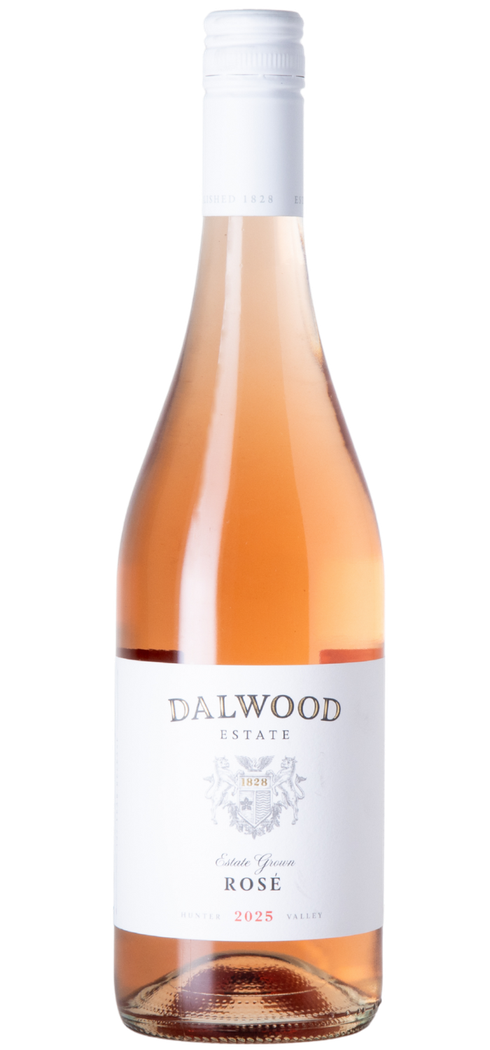
Dalwood Estate Rosé 2025
Primary flavours

Berries

Raspberry

Crisp

Red Frogs
Details
You're going to love this light pink coloured savoury rosé. It tastes of berries, with a light strawberries-and-cream flourish, some raspberries, and then, when it starts getting too fruity, the cool, crisp, citrussy acidity on the finish makes the whole package that much more refreshing.
Dalwood Estate is the oldest commercially operating vineyard in Australia. Its history dates back to 1828, when George Wyndham planted it using cuttings from the country's first grapevines. Talk about history! So why isn't this Hunter Valley estate a household name? Blame corporate wineries, as it was owned by Penfolds for many years and then bought by Orlando Wines. Finally, wine-loving hotelier Sam Arnaout bought it back from 'big wine' in 2016 as he wanted to see Dalwood (finally) shine on its own. With such an epic history, it's not surprising that the Dalwood Estate vineyard feels special. Located well away from the rest of the Hunter Valley vineyards on the sandy banks of the Hunter River, the Shiraz, Semillon, and Chardonnay from here has this undeniable (and seriously delicious) next-level roundness and generosity.
Dalwood Estate is the oldest commercially operating vineyard in Australia. Its history dates back to 1828, when George Wyndham planted it using cuttings from the country's first grapevines. Talk about history! So why isn't this Hunter Valley estate a household name? Blame corporate wineries, as it was owned by Penfolds for many years and then bought by Orlando Wines. Finally, wine-loving hotelier Sam Arnaout bought it back from 'big wine' in 2016 as he wanted to see Dalwood (finally) shine on its own. With such an epic history, it's not surprising that the Dalwood Estate vineyard feels special. Located well away from the rest of the Hunter Valley vineyards on the sandy banks of the Hunter River, the Shiraz, Semillon, and Chardonnay from here has this undeniable (and seriously delicious) next-level roundness and generosity.
Read more
Taste Profile
This wine’s tasting notes.
Sweetness

nonesomelots
Body
lightmediumfull
Fruitiness
lowmediumhigh
Tannins
lowmediumhigh
Acidity
lowmediumhigh
Oak
nonesomelots
Alcohol
low
(under 12%)medium
(12-14%)high
(14%+)
Taste Summary

This wine’s tasting notes are leaning towards light bodied, low sweetness, with medium acidity, some fruitiness, low tannins, medium alcohol and no oak.
Specs
Region
Hunter Valley
country
Australia
Grape type
Rosé
Wine Maker
Dalwood Estate
Alcohol
12.5%
Vintage
2025
Cellar period
1-3 years
Closure
Screw Cap
Production method
Vegan
Temperature
Cold 5°C-8°C
State
NSW
collection
Pairing guide
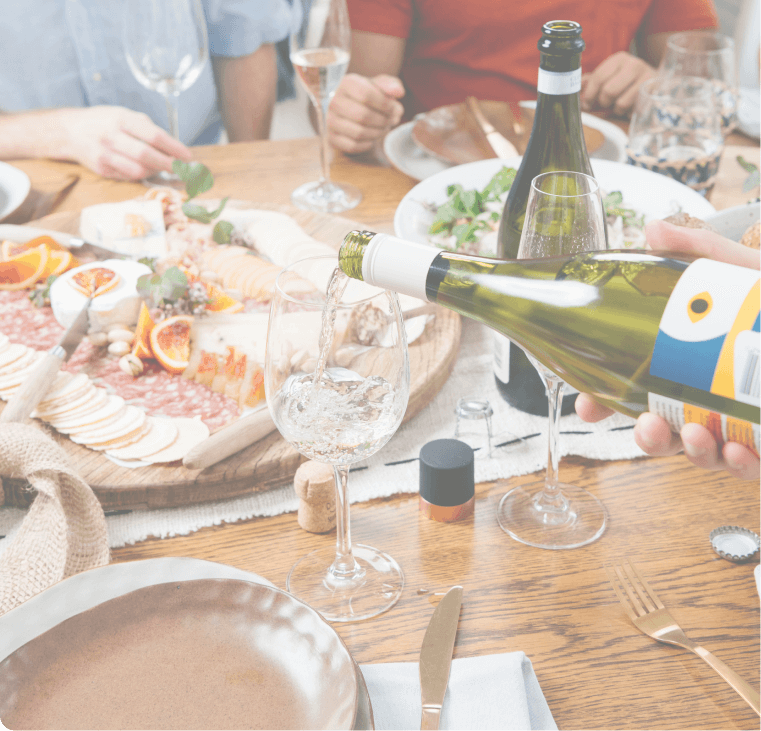
With its clever balance of just-enough bright red-berry fruit to be generous, yet that snappy, crisp acidity to finish, this nicely balanced Hunter Valley rosé is such a winner. It's a star on your dining table too, pairing well with everything from whatever makes it onto your antipasto plate, right through to baked fish, lightly spiced dips and even a mild curry, especially thanks to this Dalwood Estate rosé's gentle raspberry fruitiness.
Read more
Food

Antipasti

Baked Snapper

Middle Eastern
Tastes

Crisp

Fresh
Moods

Bored

Always A Winner
Seasons

Summer

Autumn

Spring
Recipe Matches


Wine region


Hunter Valley, Australia
The Hunter Valley is located in New South Wales, Australia. It is situated approximately 150km northwest of Sydney and is known for producing world-class Semillon and formidable Chardonnay, Verdelho, Sauvignon Blanc, and Shiraz.
The region has a long history of winemaking, with the first vines planted in the 1830s. Today, the Hunter Valley is home to more than 150 wineries, ranging from small, family-owned operations to larger, internationally recognized producers such as Tyrell’s Wines, Mount Pleasant Wines and Brokenwood Wines.
Hunter Valley comprises the following sub-regions: Upper Hunter Valley, Broke Fordwich, and Pokolbin. The region's climate is warm and humid, relying on rain, humidity, cloud cover and sea breeze to mitigate the warmth. Soil types vary across the region. Generally, Semillon performs well on the sandy alluvial flats, whereas Shiraz prefers the red loamy soil types.
Read more