








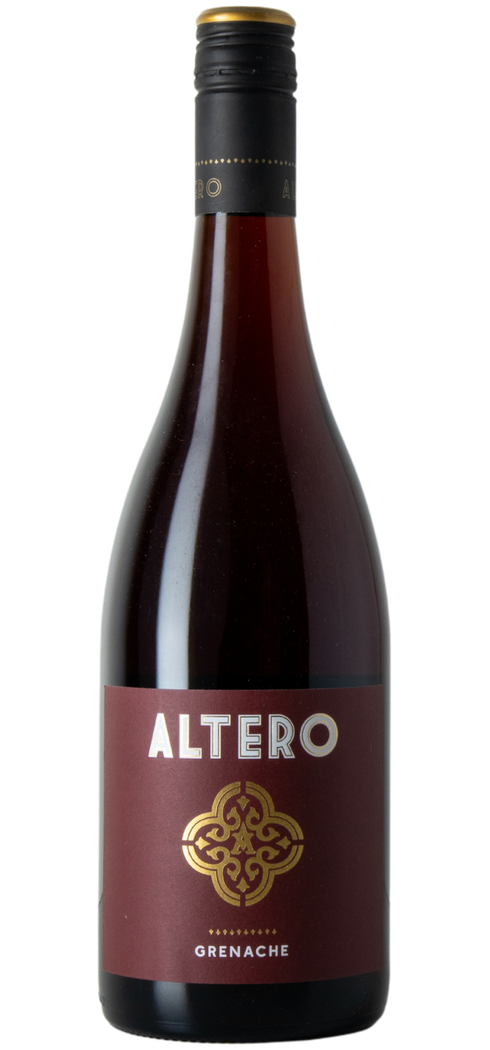
Altero Grenache 2022
Primary flavours

Cherry

Pomegranate

Raspberry

Fairy Floss

Rose Petal

White Pepper
Details
So pale and pink in the glass, this could almost be mistaken for Pinot Noir! Translucent red with aromas of cherry and fairy floss. Plenty of red fruits as well - slightly dark and brooding but also lifted, floral and alive. Red berries, roses, old leather. More complex notes of clove and white pepper come into play, giving the wine length and character. More serious than it looks.
Origin: Aragon, Spain. Mainly Grown In: France, Spain, Italy, USA, Australia and South Africa. Key Facts: Grenache is a life-of-the-party kind of grape — fun, fruity, and charismatic with a spicy pep to its feet and an inviting warmth of approachability. And, despite its Spanish origin and well-established 19th-century home in France (where it so happened to be the Pope’s wine of choice), the world's oldest continuously producing Grenache vines are actually where the life of the party always has been; Australia. Grenache is lighter in body and softer in tannin than many other red grapes which is why it is both so easy to drink on its own and why it's teamed up to make blends (like GSM) with other grapes that may need a friendlier touch to soften them up and chill out their bold, uptight and tannic tendencies. Fun Fact: In Spain, Grenache is called "Garnacha".
Origin: Aragon, Spain. Mainly Grown In: France, Spain, Italy, USA, Australia and South Africa. Key Facts: Grenache is a life-of-the-party kind of grape — fun, fruity, and charismatic with a spicy pep to its feet and an inviting warmth of approachability. And, despite its Spanish origin and well-established 19th-century home in France (where it so happened to be the Pope’s wine of choice), the world's oldest continuously producing Grenache vines are actually where the life of the party always has been; Australia. Grenache is lighter in body and softer in tannin than many other red grapes which is why it is both so easy to drink on its own and why it's teamed up to make blends (like GSM) with other grapes that may need a friendlier touch to soften them up and chill out their bold, uptight and tannic tendencies. Fun Fact: In Spain, Grenache is called "Garnacha".
Read more
Taste Profile
This wine’s tasting notes.
Sweetness

nonesomelots
Body
lightmediumfull
Fruitiness
lowmediumhigh
Tannins
lowmediumhigh
Acidity
lowmediumhigh
Oak
nonesomelots
Alcohol
low
(under 12%)medium
(12-14%)high
(14%+)
Taste Summary

This wine’s tasting notes are leaning towards light bodied, low sweetness, with medium acidity, very fruity, low tannins, medium alcohol and no oak.
Specs
Region
Riverland
country
Australia
Grape type
Grenache
Wine Maker
Altero
Alcohol
13.5%
Vintage
2022
Cellar period
1-3 years
Production method
Vegan
Temperature
Room Temperature 15°C-18°C
State
SA
Pairing guide
What a wine for summer! This is super juicy Grenache, which packs in mountains of juiciness and depth, and definitely delivers the goods when it comes to food pairing. We love this wine with roast chicken thighs, topside of beef with all the trimmings, and with classic stews like goulash. It loves a bit of smoke too, so feel free to crack it open at a barbecue or on your next Mexican culinary adventure, or whenever you feel like cooking up a mild Indian or Chinese curry.
Read more
Food

Fajitas

Bao

Tacos
Tastes

Tangy

Light
Moods

Mood for something different
Seasons

Summer
Recipe Matches


Wine region


Riverland, Australia
Located in the heart of South Australia, the Riverland wine region is a tropical paradise for wine lovers. The region was formerly known for its traditional wines, particularly Shiraz, Chardonnay, and Grenache as well as its abundance of sunshine and beautiful scenery. In the last few years it's added a raft of Mediterranean varieties to its charm - think Fiano and Nero d'Avola. The warm climate and fertile soils of the Riverland make it a perfect place for grape growing, and the wines produced there are bursting with flavour. So why not explore the wines of the Riverland and discover a new favourite?
Read more